From early spring to late autumn
Would you like flowers in your garden for a full eight months? In this blog, you’ll learn exactly how to make it happen. You’ll also discover how to design your own cutting garden, when and how to pick flowers, and how to arrange a beautiful bouquet. Read on and get inspired.
With our flower seeds, you can enjoy blooms in your garden from the very first signs of spring to the last days of autumn. That means up to eight months of colour. It’s also great for bees and butterflies, who will wake up after winter and immediately find your blooming narcissus bulbs. Then the tulips start to flower, followed by summer bloomers like dahlias, which will continue all the way until the first frost in October or November. Take a look at the table below for a complete overview.
What to plant? | When to plant? | Blooming period? | Available on our webshop |
|---|---|---|---|
| Snowdrops and crocuses | October to mid-December | January and February | July 1 to December 1 |
| Narcissus bulbs | October to mid-December | February to April | July 1 to December 1 |
| Scillas and muscari | October to mid-December | March and April | July 1 to December 1 |
| Tulip bulbs | October to mid-December | April and May | July 1 to December 1 |
| Alliums | October to mid-December | May and June | July 1 to December 1 |
| Ranunculus and anemones | Plant in autumn (outside or in a greenhouse), or indoors in February or March, then move outside or leave in the greenhouse | April to June, depending on planting time and conditions | Available year-round |
| Dahlia tubers | Plant outside mid-May to June, or start indoors in March or April | July to first frost in October or November | December 1 to June 1 |
| Annual summer flowers (from seed) | Sow outdoors in May or June, or start indoors earlier in spring | June to September | Available year-round |
Always fresh flowers at home with your own cutting garden
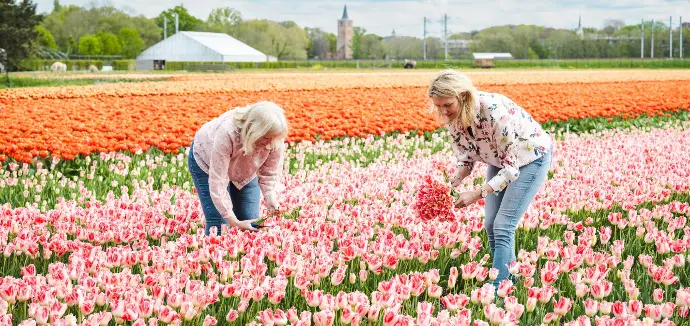
We love cutting gardens. They are not only fun to visit but also very rewarding to create in your own backyard. With just a few square metres, you can start your own garden full of flowers to pick all summer long. You can plant in a dedicated border or bed, or mix dahlias and annuals among your other plants to fill gaps and add more colour. This also gives your flowers extra shelter. One of the joys of using annual flower seeds is the ability to experiment with new varieties and colours every year.
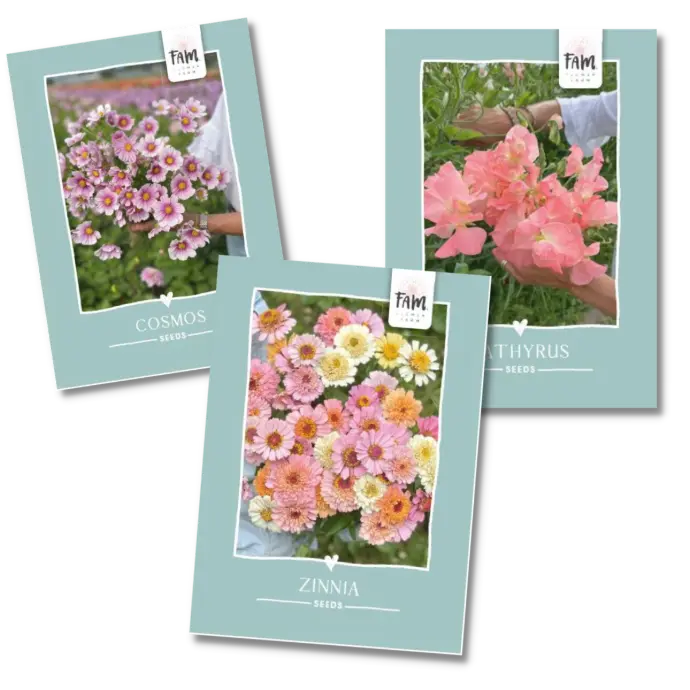
All our flower seed varieties are suitable for cutting gardens and are used by professional growers as well. They combine beautifully with our dahlias. A few highlights from our seed collection include: Amaranthus, Ammi, Cosmos, Delphinium, Dianthus, sweet peas (Lathyrus odoratus), Nigella, Poppies, Phlox, Scabiosa and Zinnias.
.
How to design your cutting garden
Step 1: Choose the right flowers
Select flowers with long, straight, and sturdy stems that have little to no side branches or excess leaves. A good cut flower stands tall and upright, and doesn’t droop. These flowers stay fresh in a vase for at least five days and sometimes even eight. At the end of this blog, you’ll find a list of the most popular cut flowers. We also have a separate blog about creating a cutting garden filled with dahlias.
Step 2: Choose the right location
Find a sunny spot in your garden. It helps to set aside a specific area for your cutting garden, even if it’s just one square metre. That small space can already hold a lovely mix of flower bulbs and seeds. If you don’t have a garden, you can create a small cutting garden on a balcony or courtyard planter, as long as there’s plenty of sunlight during the day.
Step 3: Lush and wild or neat and structured
In the past, traditional gardeners often grew flowers in neat rows between their vegetables. That gave flowers a somewhat ordinary image. Today, flowers are more often planted freely in borders.
Will you go for a lush, informal style or a more structured layout?
Geometric flowers look great in clean and formal gardens. Vibrant colours suit playful and creative gardens. Open-shaped blooms thrive in a natural garden setting. Dahlias, with their full and bushy growth, are perfect for bridging the space between shrubs and flowering plants. They are also ideal for quickly filling empty spots in summer or for creating a temporary garden with lots of visual impact.
How to pick your flowers
Always use a clean, sharp knife or pair of secateurs when cutting flowers. The best time to pick is in the morning or late evening when the air is cooler. Bring a bucket of fresh water so you can place your flowers in it right away.
Remove the leaves from the lower part of the stem that will sit in water. You can scatter those leaves back onto the soil where they will decompose and feed the earth.
Explore our garden tools to help you get started with your own cutting garden.
Explore our garden tools:
How to care for your flowers
Fill a clean vase with fresh, lukewarm water. On warm days, you can add a splash of natural vinegar. Refresh the water regularly, especially if the vase is transparent. When doing so, check if you need to trim the stems slightly.
Tip: Read our blog for more tips on how to enjoy your flowers longer indoors.
Bouquet tips
- Divide your flowers over several small vases.
- Try combining your flowers with branches from shrubs that have beautiful foliage.
- Mix the flowers with wildflowers or other garden varieties for a natural look.
- Keep your bouquet away from direct sunlight, heaters or radiators, and avoid placing it near ripening fruit.
- Place your bouquet in a cool spot overnight to keep it fresh longer.
- The art of bouquet-making is all about observing. Choose your favourite flowers and find plants that complement them.

 and then Add to Home Screen.