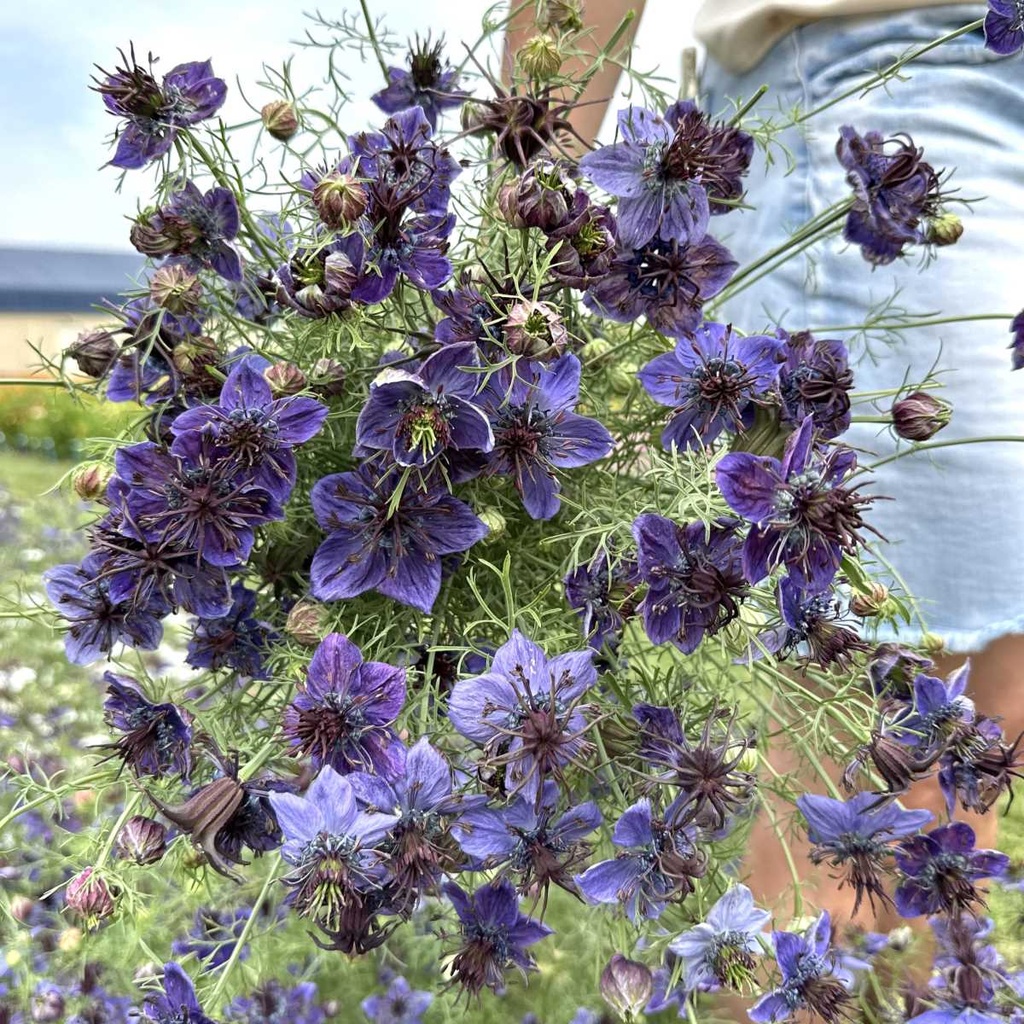
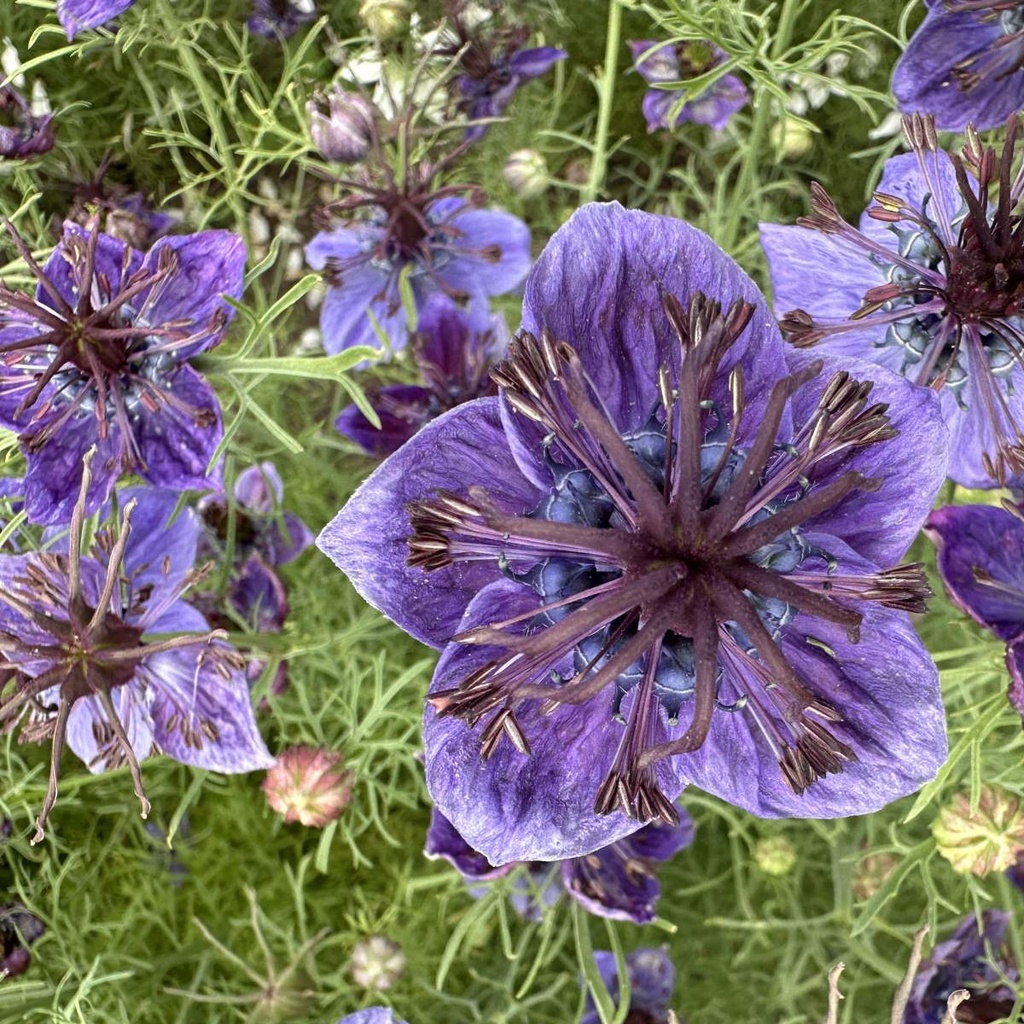
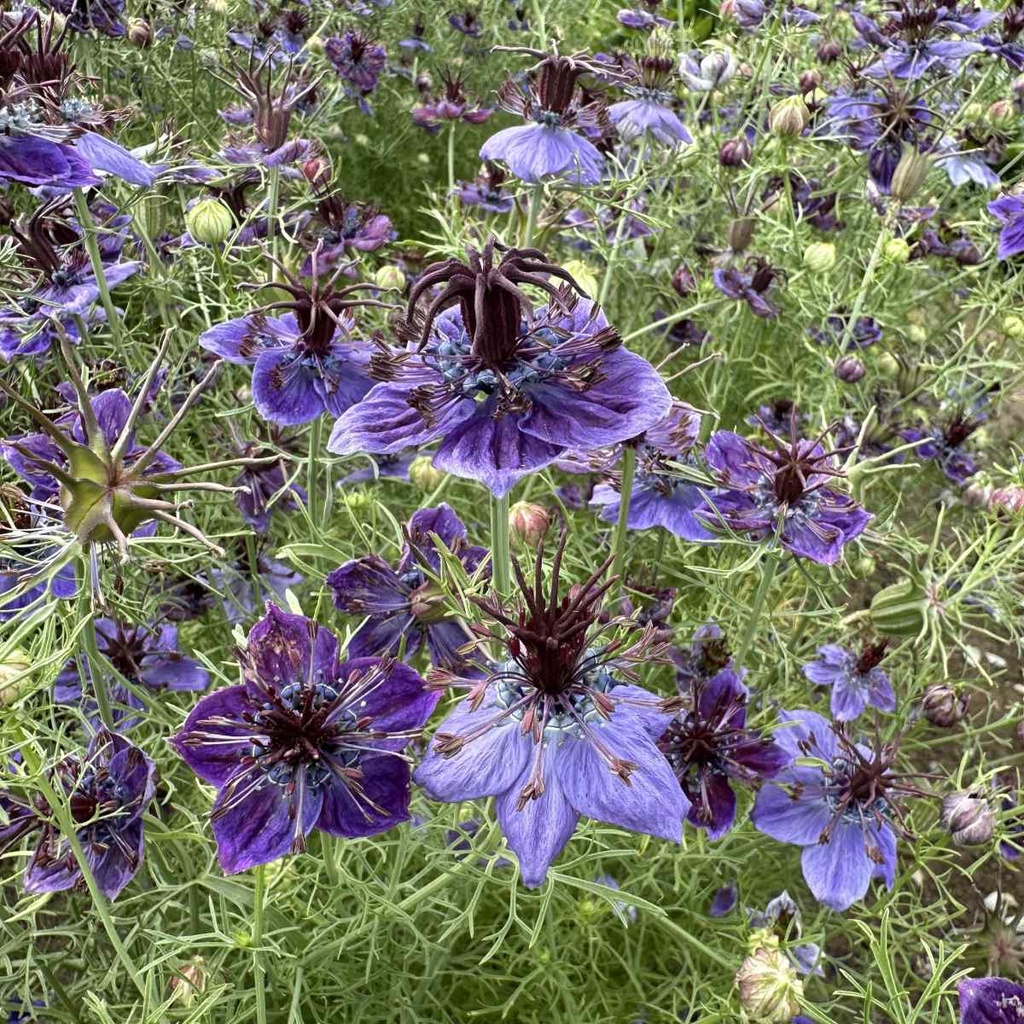
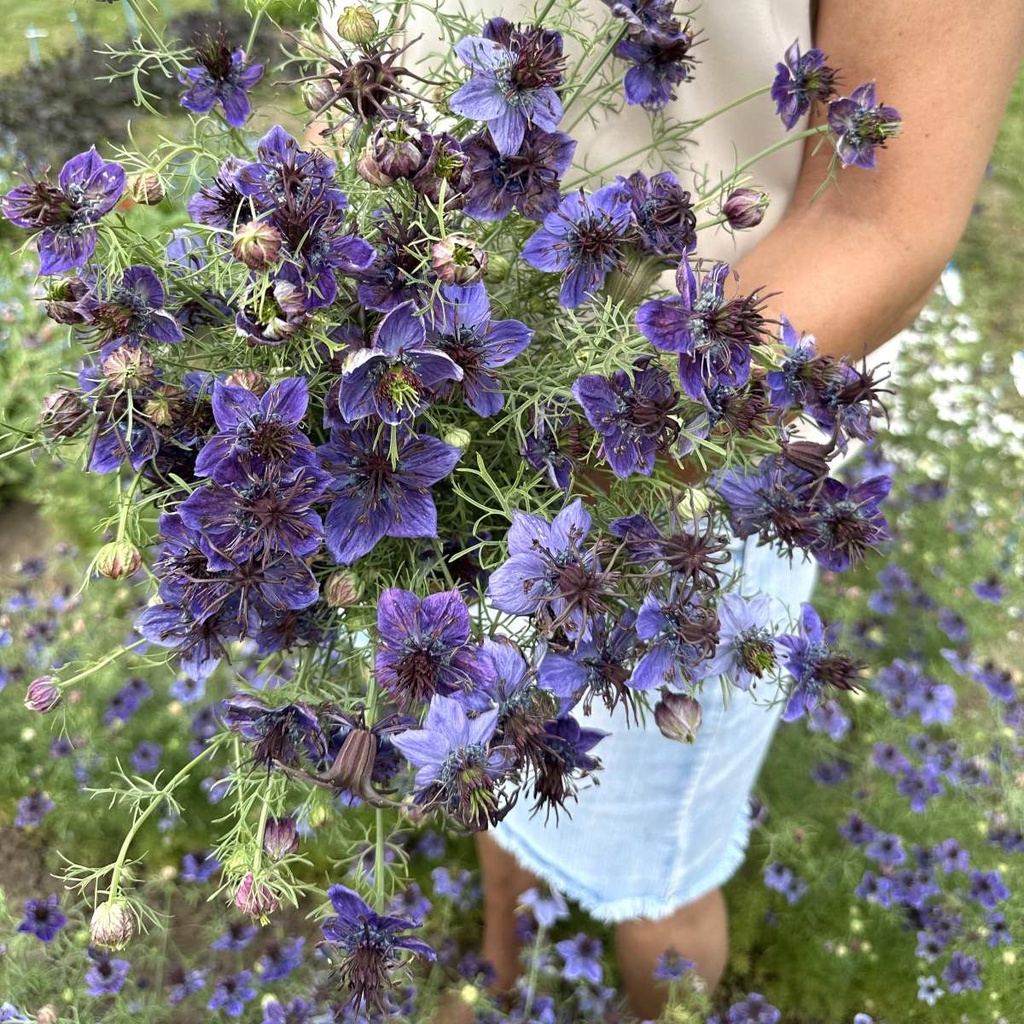
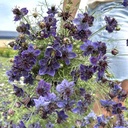
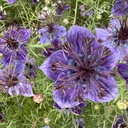
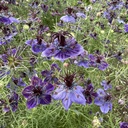
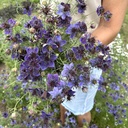
Nigella Midnight




Nigella Midnight is echt een uitzonderlijke verschijning in je tuin of border. De diepblauwe bloemen zijn super chique en combineren mooi in boeketten. Nigella's worden ook wel Juffertje-in-het-groen genoemd. Zaai ze en maak niet alleen jezelf maar ook de bijen en vlinders gelukkig!
1 zakje ≈ 0,35 gram ≈ 300 zaden
Specifications
| Type product | Bloemenzaden |
| Bijen en vlinder lokker | Ja |
| Geschikt als snijbloem | Ja |
| Standplaats | volle zon |
| Planttijd | april-juni |
| Bloeitijd | juli-september |
| Geschikt als droogbloem | Ja |
| Plant diepte zaden | 0.5 cm |
| Hoogte plant | 90 cm |
| Kiemtijd | 1-2 weken |
| Groeitijd tot bloei | 6-8 weken |
Tips
When to sow Nigella
Direct outdoor sowing: From April–May, once the risk of frost has passed and the soil temperature reaches at least 16°C. Sow every 2–3 weeks until early summer for a longer blooming period. Three to four sowings ensure continuous flower production. Autumn sowing is also possible for flowering the following year.
Indoor sowing: From March–April in larger pots. Harden off young plants outdoors and transplant after the last frost.
Sowing method
Sowing depth: Sow directly into the open ground at a depth of 0.5 cm.
Spacing: Keep 15–20 cm between plants for proper air circulation and room to grow.
Thinning: Once seedlings are large enough to handle, thin them out so the strongest plants have space to develop.
Location and soil
Light: Full sun is ideal, but light partial shade is also tolerated.
Soil: Well-drained, loose soil. Nigella tolerates dry conditions well, but thrives in fertile, airy soil.
Nigella care
Watering: Water moderately, especially during dry spells. Avoid wet soil to prevent root rot.
Support: Tall varieties or windy spots may require light support.
Self-seeding: Leave some seed pods in place for natural reseeding the following season.
Pests and diseases: Nigella is a strong plant with few problems from pests or disease.
Harvesting and drying
Fresh bouquets: Cut flowers just as they open for use in fresh arrangements.
Dried flowers: Allow blooms to fade and wait for the distinctive seed pods to appear. Cut stems and hang upside down in a dry, airy place to dry.
Combining: Pairs well with flowers like cosmos, sweet peas, and calendula for a natural, wild look.
How many seeds per square metre?
Each packet contains enough seeds for about 1 m² of flowers. This can vary by variety, so consider the mature size of the plants.
Tip: Don’t sow everything at once. Sow in stages to extend the blooming period and have a backup in case the first sowing doesn’t go as planned. A single seed can grow into a full plant – give them space.
Store seeds in a cool, dry place – they’ll remain viable for 2 to 3 years.
Want more tips on sowing and caring for your flower seeds?
Read the full sowing & planting guide on our blog.
Grow your own happiness with our annual flowers – sow, care, harvest & enjoy!
Our annual flower seeds are of the highest quality – perfect for cut flowers and loved by professional growers. Thanks to their high germination rate, you’ll enjoy excellent blooming success.
Since these flowers complete all their growth stages – from seed to bloom – in just one season, they hold incredible growth power.
The result? Months of flowering joy! And best of all, for many varieties: the more you pick, the more flowers they’ll produce.
Our seeds are untreated and uncoated, making them ideal for growing organic flowers.
More beauties from our farm:

To install this Web App in your iPhone/iPad press
 and then Add to Home Screen.