Can you plant flower bulbs in pots and containers, and what should you know?
Yes, flower bulbs grow beautifully in pots and containers! It's a wonderful way to create a colourful display of spring flowers, even if you only have a balcony or terrace. The most important things are good drainage and loose, well-draining compost to prevent the bulbs from sitting in waterlogged soil.
Our tip: Try the bulb lasagne planting method! This clever technique involves planting different flower bulbs in layers. Place larger bulbs, such as tulips and narcissus, in the bottom layer and smaller varieties, such as grape hyacinths (Muscari), above them. Leave a few centimetres of compost between each layer. This way, you can grow lots of flowers in a small space and enjoy a succession of beautiful blooms throughout spring.
Keep your planted pots in a sheltered spot during winter and water sparingly to prevent the compost from becoming too wet. During severe frost, protect your pots with horticultural fleece or hessian, or temporarily move them into a cool, frost-free shed. Placing them against a sheltered house wall can also provide extra protection.
At FAM Flower Farm, you'll find beautiful flower bulb mixes that are especially suitable for growing in pots and containers.
In short: Good drainage, the correct planting depth, clever layering of different flower bulbs and protection from severe frost are the keys to a spectacular spring display in pots.
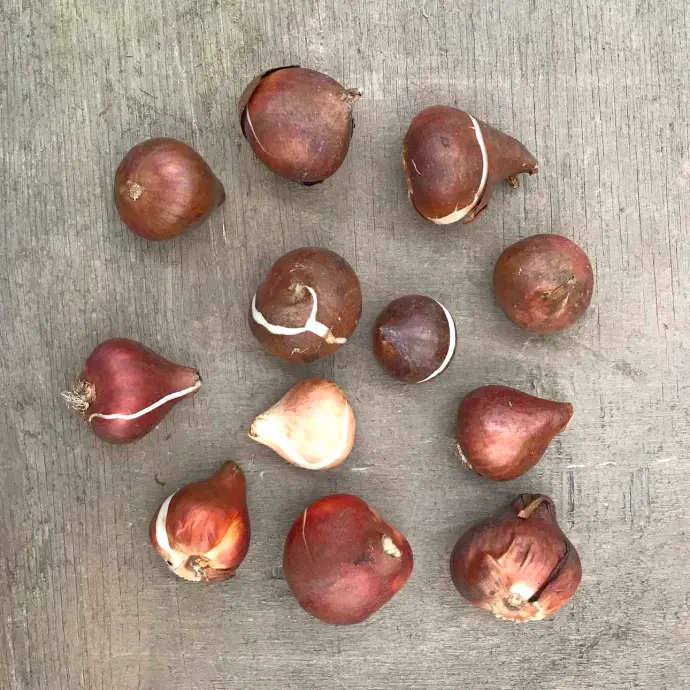
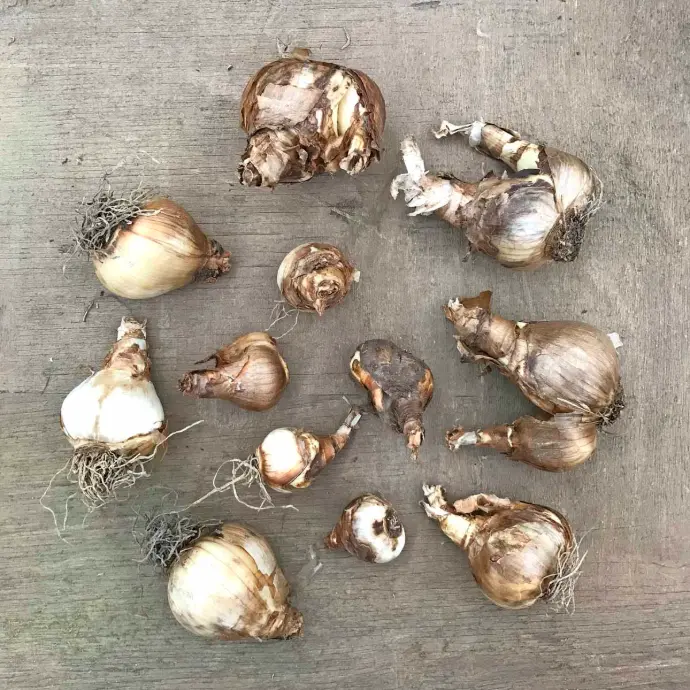
When is the best time to plant tulips, narcissus, alliums and ranunculus for spring flowers?
The best time to plant tulip bulbs, narcissus and alliums is in autumn, from late September to December, as long as the ground isn't frozen. Planting in autumn gives the bulbs plenty of time to develop strong roots before winter, ensuring healthy growth and beautiful blooms in spring.
Ranunculus can be planted in October or November in a sheltered, frost-free location, or outdoors from February or March once the risk of severe frost has passed. Planting at the right time encourages strong root development and healthy plants with plenty of flowers. Planting too late may result in a shorter flowering period.
At FAM Flower Farm, we deliver our flower bulbs and ranunculus corms at the right time of year, so you can plant them during the ideal planting season.
In short: Plant tulips, narcissus and alliums in autumn for beautiful spring flowers. Ranunculus can be planted under protection in autumn or outdoors in early spring.
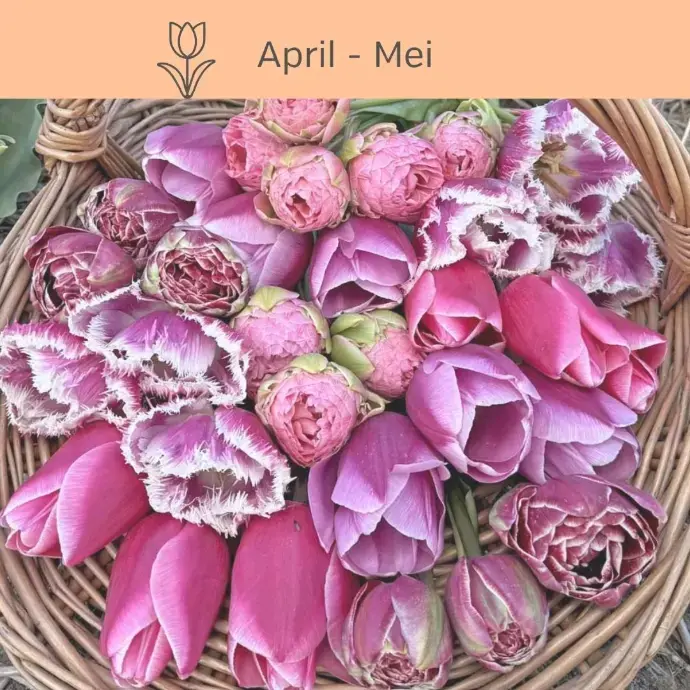
How to plant tulip bulbs step by step for beautiful blooms in April
Planting tulip bulbs is easy! For the best results, plant them with the pointed end facing upwards, at a depth of around two to three times the height of the bulb. Choose a spot with loose, well-drained soil. Loosen the soil before planting and mix some well-rotted compost into the top layer. Place the tulip bulbs in the soil and cover them with earth. If the soil is dry, water lightly after planting. Then simply let nature do the rest!
Our tip: Plant tulip bulbs in groups of the same variety to create stunning splashes of colour in your garden. At FAM Flower Farm, we carefully select large, high-quality tulip bulbs, giving you the best chance of growing strong stems and beautiful, full blooms.
In short: The right planting depth, planting in groups and a little patience are the secrets to a spectacular tulip display in spring. For a more natural, playful look, try mixing different tulip varieties and colours together.
.
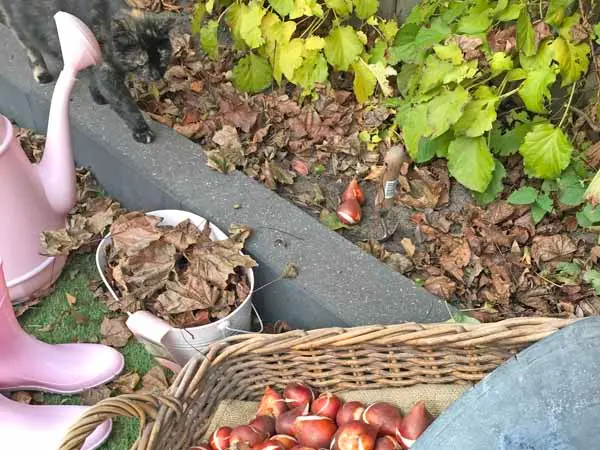
How deep and how far apart should you plant tulips, narcissus, alliums and ranunculus?
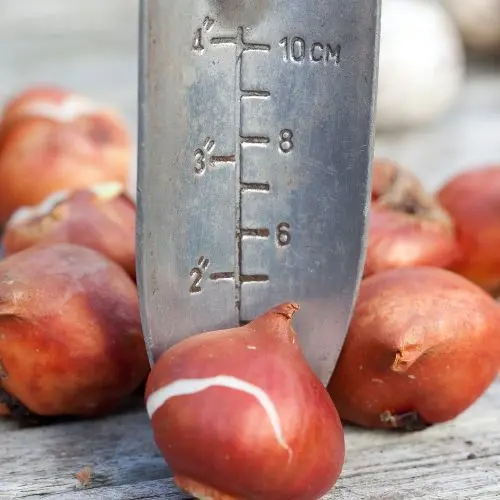
Getting the planting depth and spacing of your flower bulbs right is important for healthy growth and beautiful blooms. As a general rule, plant flower bulbs at a depth of two to three times their height, with a spacing of approximately two to four times their width.
Recommended planting depths and spacing:
- Tulips and narcissus: Plant 12–15 cm deep, spacing the bulbs 8–15 cm apart.
- Alliums: Planting depth depends on the size of the bulb. Larger allium varieties should be planted 15–20 cm deep, with 20–30 cm between bulbs. Smaller varieties can be planted closer together and at a shallower depth.
- Ranunculus: Plant the corms 4–6 cm deep, spacing them 10–15 cm apart.
Planting bulbs too deeply can slow down their growth, while planting them too close to the surface may leave them vulnerable to frost and drying out.
At FAM Flower Farm, we include clear planting instructions with every variety, so you'll know exactly how deep and how far apart to plant your bulbs and corms.
In short: Adjust the planting depth and spacing to suit each flower variety. This gives your plants the best possible start and helps create a garden full of spectacular spring flowers.
What is the best soil and location for planting flower bulbs in the garden?
Flower bulbs grow best in a sunny or lightly shaded spot with loose, well-drained soil. Good drainage is especially important, as waterlogged soil can cause flower bulbs to rot during winter. If you have heavy clay soil, improve the drainage by mixing in well-rotted compost and suitable coarse grit. For very wet soil, consider creating a raised flower bed to help excess water drain away.
Avoid using fresh manure or fertilisers high in nitrogen when planting your bulbs. Too much nitrogen encourages leafy growth rather than beautiful flowers.
From our many years of growing experience, we've found that flower bulbs thrive particularly well in loose, slightly sandy loam soil. At FAM Flower Farm, we include practical planting and care tips with every variety to help you enjoy a garden full of gorgeous spring flowers.
In short: A sunny spot and well-drained soil are the keys to growing healthy flower bulbs. If extra nutrients are needed, feed your bulbs during or just after flowering, while the leaves are still green, to help them build up energy for the following year.
How to combine tulips, narcissus, alliums and ranunculus for a long flowering season
By combining flower bulbs with different flowering times, you can enjoy a beautiful succession of blooms from early spring right through to early summer.
Narcissus and early tulips bring the first splashes of colour in spring, followed by later-flowering tulip varieties. Ranunculus add even more colour in late spring, depending on when they are planted and the weather conditions. Finally, the spectacular flower heads of alliums steal the show, with many varieties flowering well into June.
Our tip: Create a layered flower border by arranging your flowers according to their height. Plant shorter narcissus and ranunculus towards the front, medium-height tulips in the middle and tall alliums towards the back. For a harmonious look, choose three main colours and repeat them throughout your border. From our growing experience, a combination of approximately 40% tulips, 40% narcissus and 20% alliums works beautifully. You can add ranunculus between these groups for an extra splash of colour.
At FAM Flower Farm, you'll also find carefully selected flower bulb mixes and planting collections, with varieties chosen to complement each other beautifully.
In short: Combine flower bulbs with different flowering times, heights and complementary colours to create a stunning spring garden. With a little planning, you'll enjoy wave after wave of beautiful flowers for months!
How to plant flower bulbs in pots and containers for a beautiful spring display
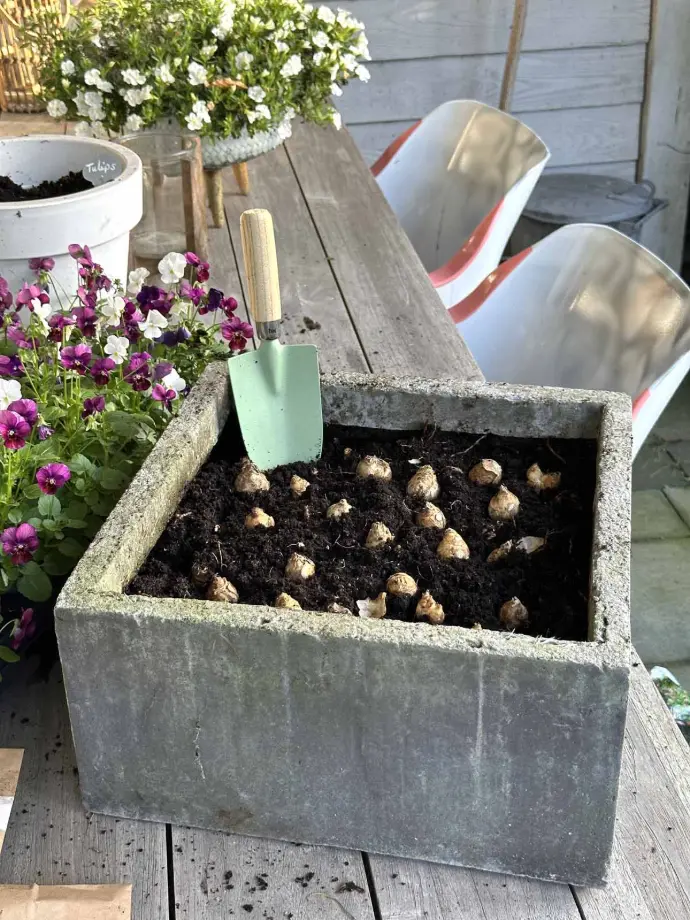
Yes, flower bulbs grow beautifully in pots and containers! They're perfect for creating a colourful spring display on your patio, balcony or terrace. The key to success is choosing pots with drainage holes and using loose, well-draining compost to prevent waterlogging.
Our tip: Try the bulb lasagne method! This clever planting technique involves layering different flower bulbs in one pot. Place larger bulbs, such as tulips and narcissus, in the bottom layer, with smaller varieties like grape hyacinths (Muscari) above them. Leave a few centimetres of compost between each layer. By combining bulbs with different flowering times, you can enjoy a succession of beautiful blooms in the same pot throughout spring.
Keep your pots in a sheltered spot during winter and water sparingly, making sure the compost doesn't become waterlogged. During severe frost, protect your pots with horticultural fleece or hessian, move them temporarily into a cool, frost-free shed or place them against a sheltered house wall for extra protection.
At FAM Flower Farm, we offer carefully selected flower bulb mixes that are particularly suitable for growing in pots and containers.
In short: Good drainage, clever bulb layering and protection from severe frost are the secrets to a spectacular spring display in pots.

 and then Add to Home Screen.