Pre-sowing cosmos: summer joy starts now
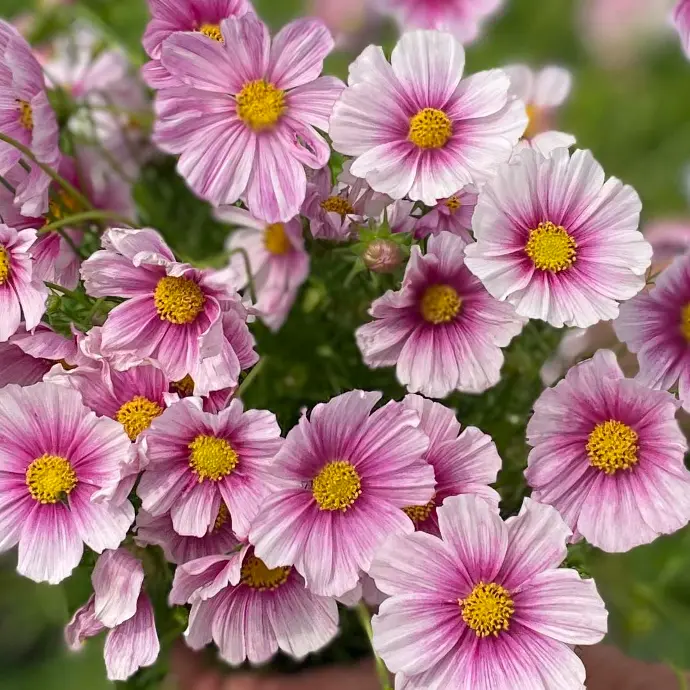
Cosmea, also called cosmos, is an annual plant that is very easy to sow. Since I can't wait any longer for the nice weather, I am going to pre-sow these flower seeds. Unfortunately, I don't have a greenhouse yet, so I will put them in the house in a light spot. Sowing Cosmea is not difficult, it makes you want summer even more! They bloom from July until the first night frost. Cosmea is available in white, pink, yellow and orange in many different shades.
When to sow cosmos?
Pre-sowing: mid-March to late April
Direct sowing outdoors: mid-April (after the last frost) to late June
Flowering period: June to November
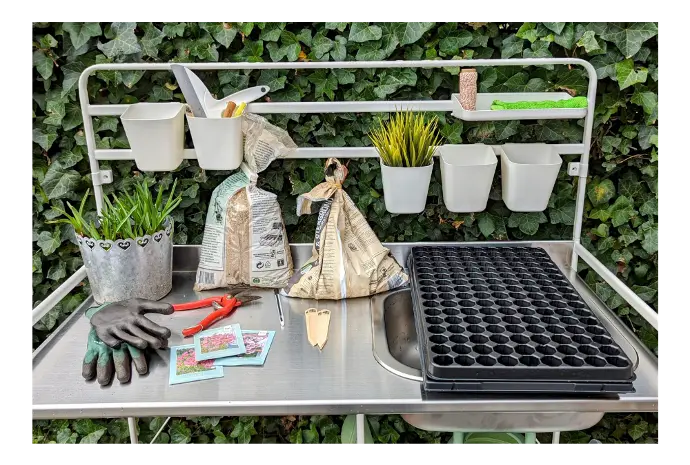
What you’ll need:
- Seed-starting compost
- Vermiculite (optional)
- Cosmos seeds
- Seed tray
- Watering can
- Plant labels
- Waterproof marker
Sowing cosmos – how I do it
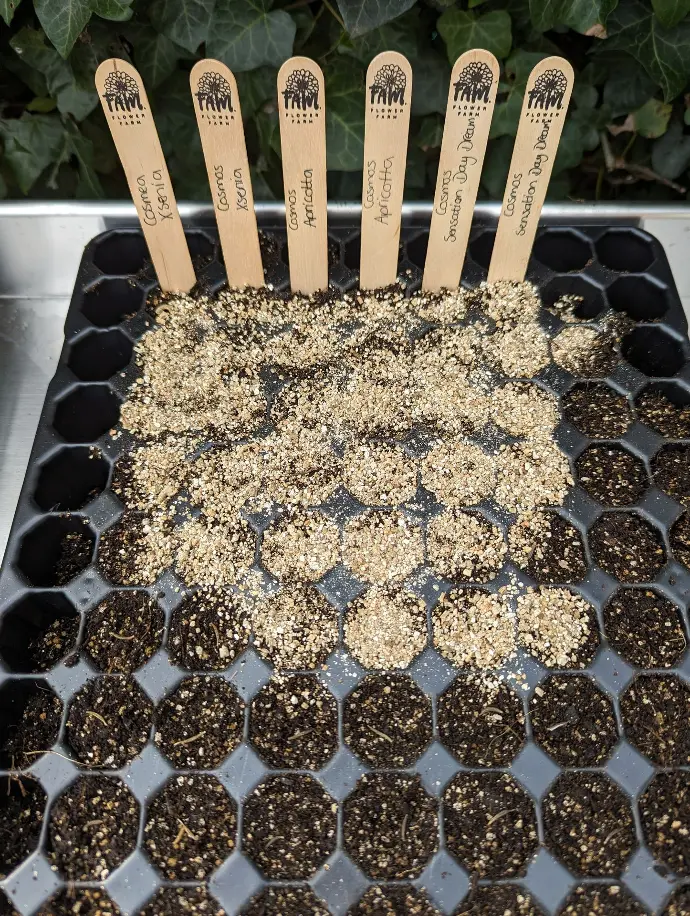
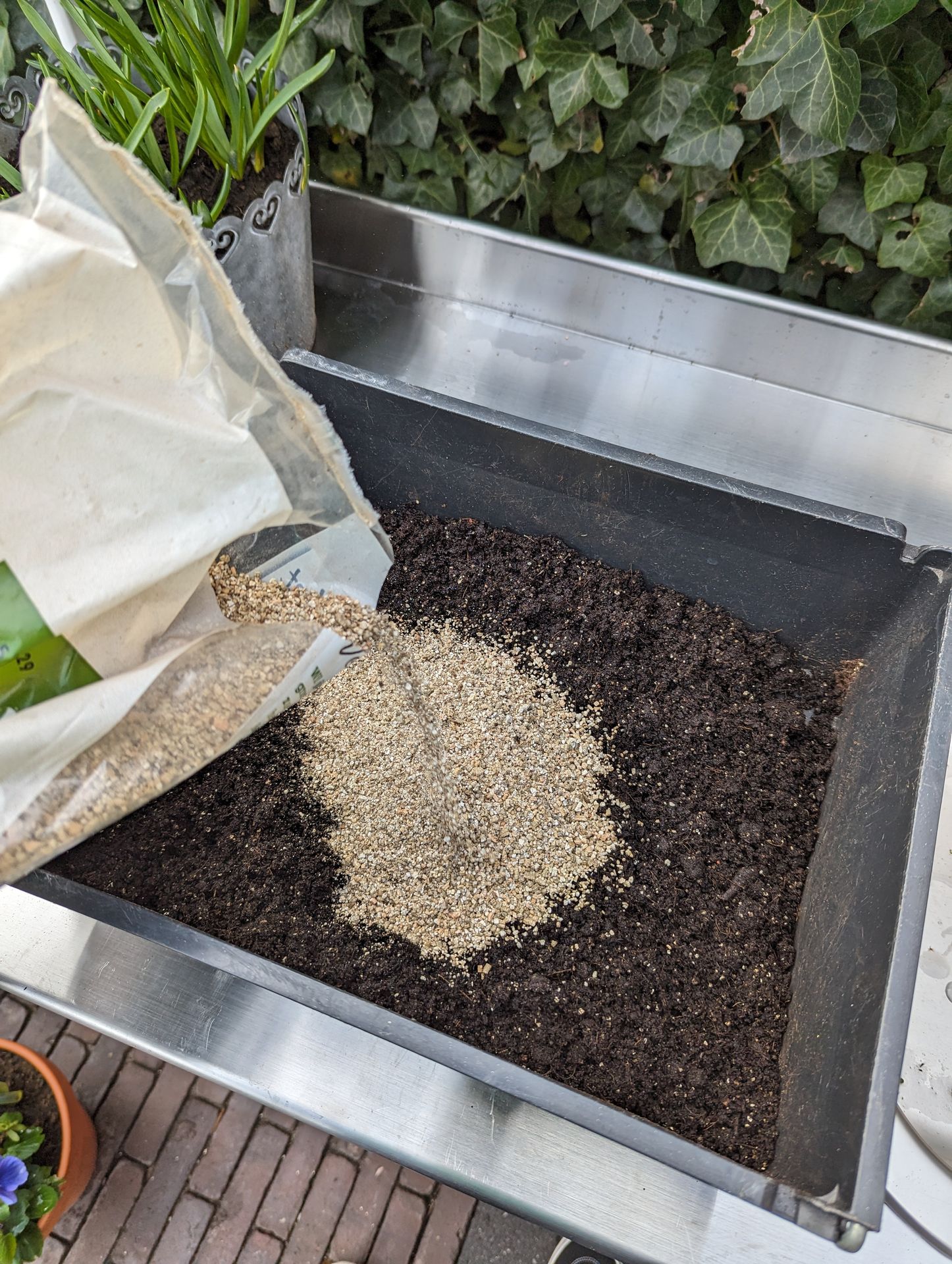
Since I’m sowing three different varieties of cosmos, I start by writing out the labels. (I once forgot to do this and had already put the seeds in the soil – I had no idea which variety was where. You’ll thank me later!) Next, I mix the seed-starting compost with about 30% vermiculite. No need to be precise – it’s just a guideline.
Vermiculite is a puffed mineral that allows air through and retains moisture, making it the perfect addition to create a light, airy mix that seeds love for germination.
Then I fill the seed tray with the mix. This is a large tray with 144 cells. I have more than enough cosmos seeds, but I also plan to sow some directly in the garden later on.
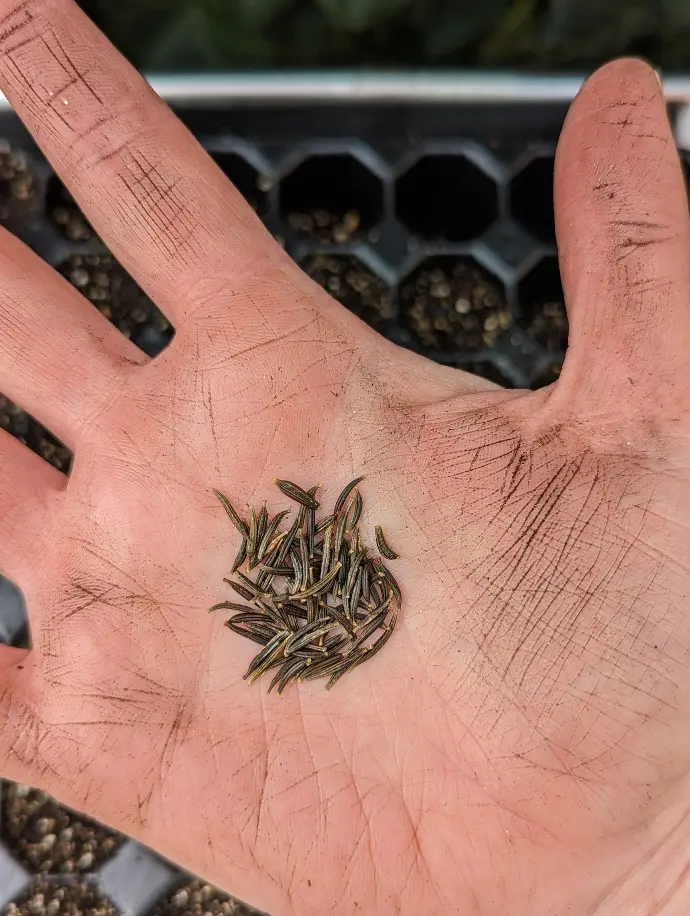
So I sow two rows per variety. I plant one seed per cell. If you’re using a tray with larger cells, you can add 2 or 3 seeds per cell. Brush off any excess mix with the flat of your hand. Place one seed per cell on top of the mix. You can press them in lightly, but it’s not necessary.
Then add the labels or lay the seed packets nearby to keep track. Once all the cells are filled, I sprinkle a very thin layer of vermiculite over the top. Cosmos seeds need light and air to germinate, so be careful not to cover them too thickly. This tray has a water reservoir underneath – I fill it with water and place the tray above it. The soil absorbs water from below, so the seeds stay in place. (Top watering can cause seeds to shift and settle unevenly.)
Finally, I place the labels in the tray and pop the lid on. I put the tray in a bright room at around 18–20°C.
Important: As soon as the first seedlings appear, move the tray to a cooler spot right away – this prevents them from getting leggy and weak.
"The more you pick, the more flowers you get back."
Keep the soil moist and when the seedlings have 2 sets of leaves you can start transplanting them; transferring them into a larger pot. I use a reusable p9 pot for this, a plastic pot 9 inches in diameter. Then put them away in a cool place and as soon as the frost heals are over, about mid-May, you can plant them in the ground about 30 centimeters apart.
And then it takes some patience. But once they bloom, you can pick beautiful bunches of them! The more you pick, the more flowers you get back.
Good luck and have fun!
Laura
About guest blogger Laura
Hi! My name is Laura and I’m a guest blogger at FAM Flower Farm. I’m a huge dahlia fan and I love sharing my gardening adventures on Instagram at @takkewijflaura.
Sowing flower seeds is all about trying, learning and enjoying the process – no two seasons are ever the same! I hope I can inspire you to get out there and start growing.
#spreadtheloveforflowers
Warm greetings, (takkewijf) Laura

 and then Add to Home Screen.