Delphinium (also known as larkspur) is a beautiful flower with tall spikes, deeply lobed leaves, and long, elegant stems. This makes it a perfect choice for cutting and arranging in bouquets. But how exactly do you sow delphinium? I’ll gladly share how I do it myself.
Sowing delphinium: how do I do it?
Let’s start with something simple: sowing delphinium! Originally from the Mediterranean, this elegant flower is a favourite in cutting gardens. There are over 400 varieties in shades ranging from white and pink to pale blue and deep purple, a stunning addition to any garden. But do be careful: delphinium is toxic, so keep it out of reach of pets and small children.
When and how to sow delphinium?
Because delphinium loves the cold, you can sow it in autumn (October) or in late winter (February/March). It typically blooms from June through October.
What you’ll need:
- Seed-starting compost
- Vermiculite
- Delphinium seeds
- A seed tray or P9 pots (9 cm wide)
- Watering can
- Plant labels
- A fridge
Let’s get started…
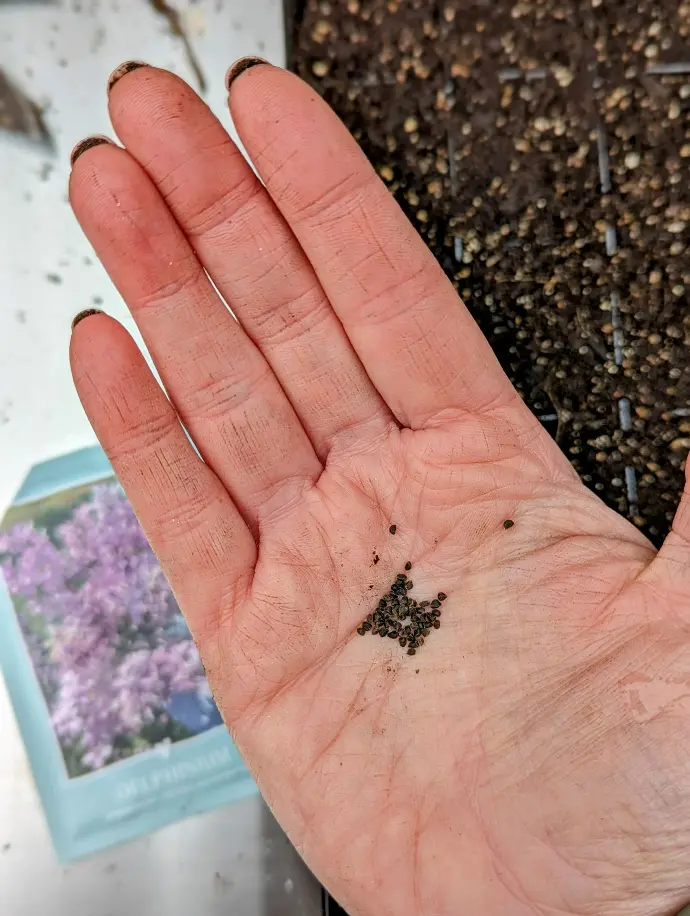
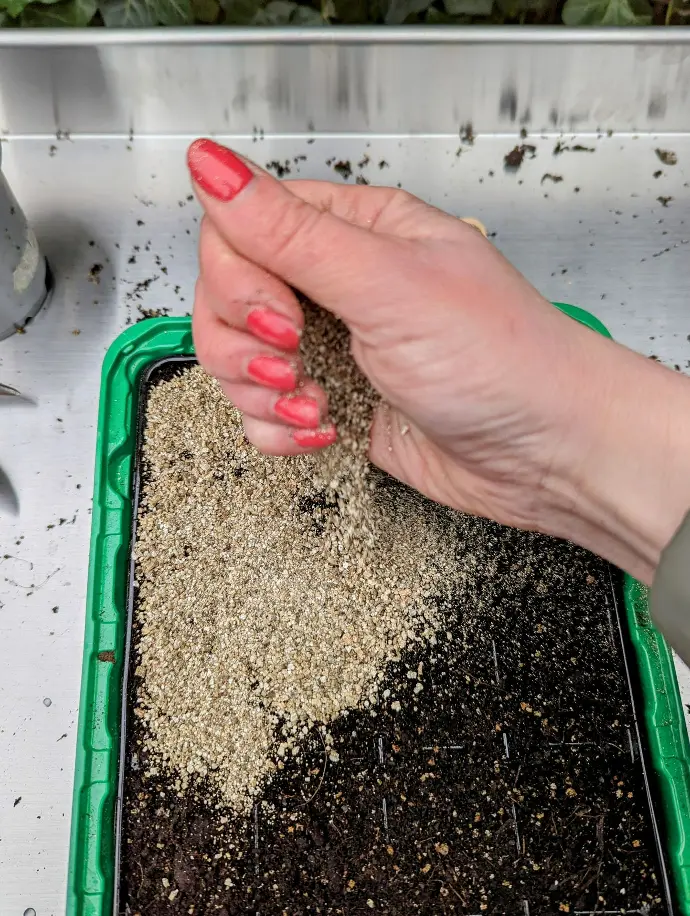
Delphinium seeds are very small, which is why I use seedling soil combined with about 30% vermiculite. Vermiculite is a puffed mineral that is permeable to air and retains moisture, which makes the mixture with the seedling soil ideal for a seed to germinate. I fill the container with seedling soil and to that I add the vermiculite, then I mix that and you feel it becomes an airy mix. Add some water until you can knead the mix a little bit.
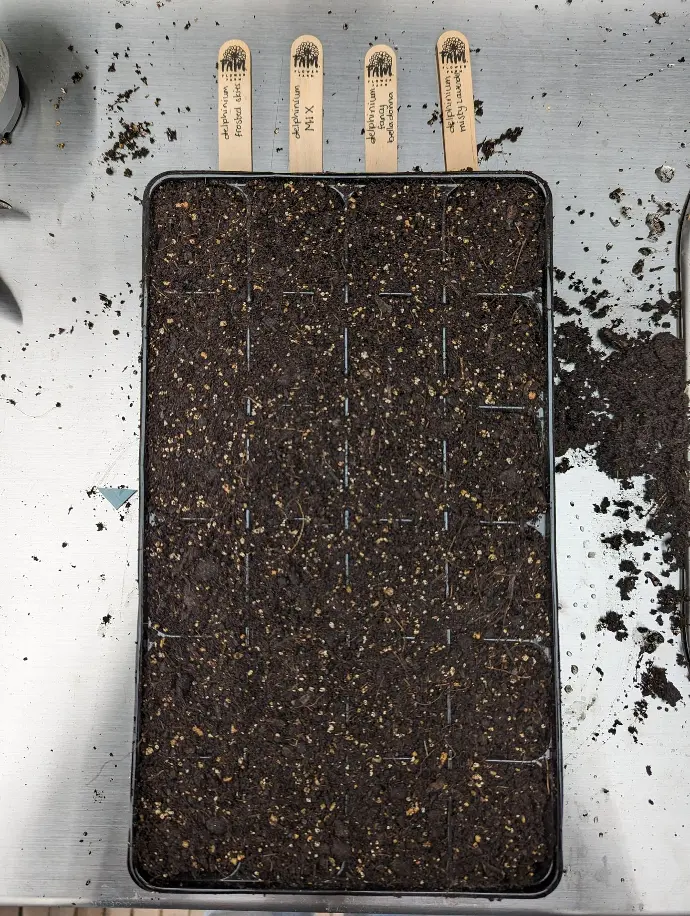
Then I fill the tray to the brim with the mix. Gently press the soil slightly and again fill the tray to the rim. Then put the seeds on top, I use 4 but in a p9 pot you can put 6/7 on top. Press the seeds lightly so they don't roll off the mix. Then top your tray or pot with just vermiculite. This will keep it covered but still let light through.
If you have used different varieties, it may be useful to use labels on which you can write the name. Finally, you put the tray or jar away in a cold place, in the refrigerator for example. You think it off with a plastic lid or something else for example a zip lock bag, whatever fits. After 3 weeks the seeds have sprouted.
Because the mix is already moist you don't need to water the seeds for the first 3 weeks.
After those three weeks you take them out of the fridge and put them in a room where it is about between 15-17 degrees, not in direct sunlight, then they will germinate. Once the plantlets are about 5 inches tall, you can put them in a larger pot and harden off outside. In mid-May (after icing saints) you can plant them outside in the open ground, make sure there is a distance of about 30 centimeters between the plants.
Ridderspoorzaadjes zijn heel klein en daarom gebruik ik zaai-en stekgrond in combinatie met ongeveer 30% vermiculiet. Vermiculiet is een gepoft mineraal dat lucht doorlatend is en vocht vasthoudt en dat maakt het mengsel met de zaai-en stekgrond ideaal voor een zaadje om te ontkiemen. Ik vul de bak met zaai-en stekgrond en daar voeg ik de vermiculiet aan toe, daarna mix ik dat en dan voel je dat het een luchtige mix wordt. Voeg wat water toe tot je de mix een beetje kan kneden.
Daarna vul ik de tray tot de rand met de mix. Druk zachtjes de grond iets aan en vul nogmaals de tray aan tot de rand. Daar leg je de zaadjes bovenop, ik gebruik er 4 maar in een p9 potje kan je er 6/7 op kwijt. Druk de zaadjes lichtjes aan zodat ze niet van de mix afrollen. Daarna top je je tray of pot af met alleen vermiculiet. Dit zorgt dat het afgedekt is maar nog wel licht doorlaat.
Als je verschillende soorten hebt gebruikt, kan het handig zijn om labels te gebruiken waar je de naam op kan schrijven. Tot slot zet je de tray of pot weg op een koude plek, in de koelkast bijvoorbeeld. Je denkt het af met een plastic deksel of iets anders bijvoorbeeld een zip lock zak, wat maar past. Na 3 weken zie je dat de zaden zijn uitgelopen
Omdat de mix al vochtig is hoef je eerst in de eerste 3 weken nog geen water te geven.
Na die drie weken haal je ze uit de koelkast en zet je ze in een kamer waar het ongeveer tussen de 15-17 graden is, niet in direct zonlicht, dan gaan ze ontkiemen. Zodra de plantjes ongeveer 5 centimeter hoog zijn, kan je ze in een groter potje zetten en buiten afharden. Halverwege mei (na ijsheiligen) kan je ze buiten in de volle grond planten, zorg voor een afstand van ongeveer 30 centimeter tussen de planten.
10 seedlings per square metre is plenty for a cutting garden full of joy.
About (takkewijf)Laura
Hi! My name is Laura and I’m a guest blogger at FAM Flower Farm. I’m a huge dahlia fan and I love sharing my gardening adventures on Instagram at @takkewijflaura.
Sowing flower seeds is such fun and really just a matter of trying, learning and seeing what happens. With a bit of luck and a little humour, I think we can all grow something magical.
I hope I can inspire you to give it a go too. #spreadtheloveforflowers

 and then Add to Home Screen.